.avif)
%20(3).webp)


Finland may hold the mantle for being the “happiest country in the world” per the World Happiness Report, but this label hasn’t emerged in a vacuum.
The country’s stellar social-support system, which distributes comprehensive welfare packages such as healthcare and education support, has allowed its citizens to flourish, both personally and professionally.
Case in point, the country has produced an impressive slate of growth-stage upstarts and multinationals alike. Telecoms giant Nokia is headquartered in Finland, and first went public in 1994. Finland is also home to a roster of buzzy unicorn startups, including wearable ring Oura, delivery service Wolt, and gaming developer Supercell.
One of the investors furthering the growth is Tesi, Finland’s state-owned investment fund. The firm’s investment operations started in 1996, and since then, it’s been crowned one of Europe’s most active LPs.
It invests in both Finnish and European fund managers in venture capital, growth and buyout, as well as into Finnish companies at various growth stages.
“Our mandate is to develop the Finnish SME and scaleup space” Samuel Wendelin, head of fund investments at Tesi, told European Women in VC. “We also produce a lot of research and data that we distribute into the market targeted for both Finnish and international investors, where we try and keep stakeholders and decision-makers informed about what’s happening in Finland.” /im
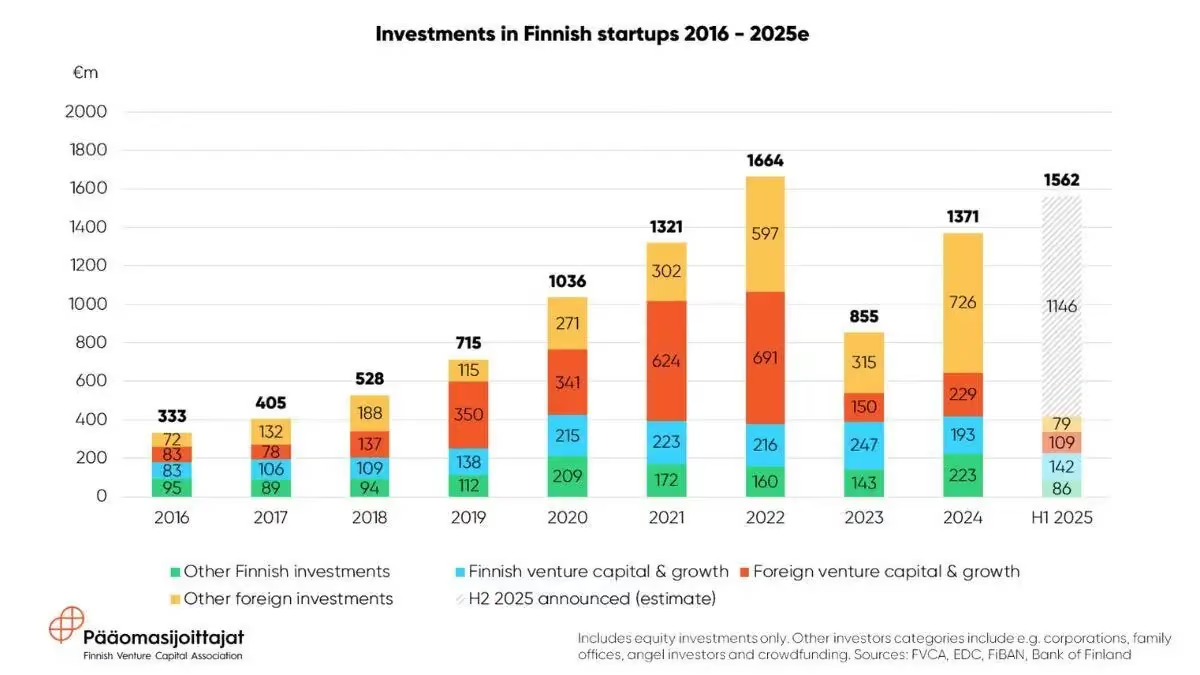
Indeed, 2025 has been a banner year for the ecosystem; Finnish startups were reported to have secured around €1.5 billion in total funding — tailing the peak investment of €1.6 billion in the ecosystem in 2022. It’s a sign of renewed confidence in the country’s technological potential.
Investment strategy
Tesi’s thesis is simple. It launched a new investment strategy for the period of 2025-2029, with the aim of deploying around €350-€400 million every year. Around half of that will be allocated into fund investments, and the other half will be deployed directly to companies.
“The fund investment side is targeted at venture, growth, and buyout funds starting from the very early stages of founding companies, to mature companies that might be targeting a public listing,” he said. “The direct investments are focused on venture-backed firms from early stages to scaleups, and industrial resilience. We are prepared to back the best-performing firms with up to €50-60 million in rounds that amount to several hundreds of millions.”
While the fund touts itself as a generalist, it is eyeing the deep tech, defence, clean economy, health & life science, and AI, digital & SaaS. sectors with pronounced enthusiasm.
One of its crowning achievements is backing Lifeline Ventures, the Helsinki-based early stage VC firm that’s backed almost every Finnish unicorn in the past decade. The VC firm signed one of the first cheques for the likes of Oura, IQM, Supercell, and Wolt — and recently unveiled a €400 million fund to continue backing Finland’s emerging technological darlings.
“We’ve had a relationship with Lifeline since they raised their first fund, and we were an early investor through two different pockets - our own balance sheet and KRR, where Tesi manages Finnish pension funds’ assets,” Wendelin said.
Betting on potential
Although it’s an insular ecosystem, one of Finland’s strengths lies in its tech-oriented community. Home to one of European tech’s flashiest conferences - Slush - the country has fostered a name for itself as a hub for up-and-coming entrepreneurial ingenues.
The country also has a stellar university ecosystem that encourages IP research, Wendelin told EWVC. “Right now, the Finnish market is great at seeding new startups, and we have a lot of early-stage capital available. It helps later stage investors to come in and scale those companies,” he added. “We have a local advantage by being well-integrated into their networks already from early days.”
Beyond the university hubbub, Helsinki is also home to the 90 Day Finn Program, welcoming companies that have around 10 or more employees, and an annual turnover of around €1 million, to set up shop in the city for three months.
It’s a lofty bid to try and lure foreign talent to the country and put the country on the map.
“Talent acquisition can be a roadblock,” Wendelin noted. “Finland is on the brink of Europe, so not everyone would find a way to move and integrate here organically.”
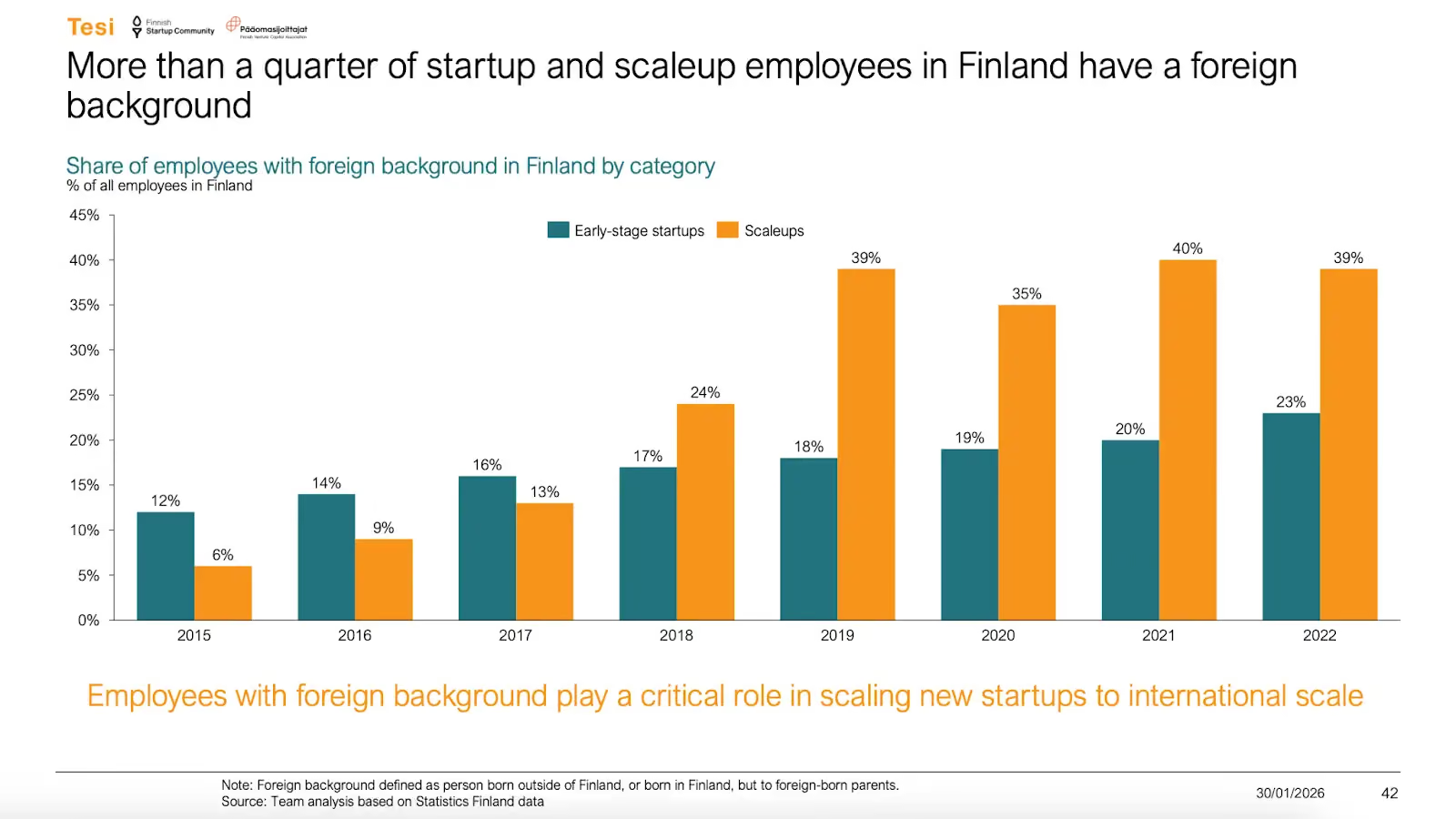
But Finland is making progress. Per a report produced by Tesi, more than a quarter of startup and scaleup employees in the country have a foreign background — and they play a key role in helping companies scale internationally. Compared to its European counterparts, Finland doesn’t have buckets of private wealth. But Wendelin is seeing the flywheel effect already permeating the country’s tech ecosystem.
“Institutions do need to chip into the best companies, but we’re also getting more successful entrepreneurs to contribute back to the ecosystem through Angel investments, their networks and knowledge-sharing,” he added.
At the end of the day, Finland’s success lies in clinching more later-stage financing to plug the gap for later-stage growth. While the IPO market has been stagnant for a few years, Wendelin is nonetheless expecting the markets to open up in the near term.
Until then, the country’s startup ecosystem is brimming with excitement: from the 90 Day Finn Program to Slush 2026, Wendelin asserts there’s no shortage of opportunities for techies to touch down in the ecosystem.
Samuel Wendelin is head of fund investments at Tesi. He joined the firm in 2019 after stints at Handelsbanken Capital Markets, Summa Capital, and EY.
Tesi is Finland’s state-owned investment fund. It backs VC and private equity funds, and promising Finnish companies, with a keen focus on deep technology, health and life sciences, clean economy, and defense technology. It has €3.1 billion in assets under management, and has invested in 136 VC and PE funds, and 138 companies.